
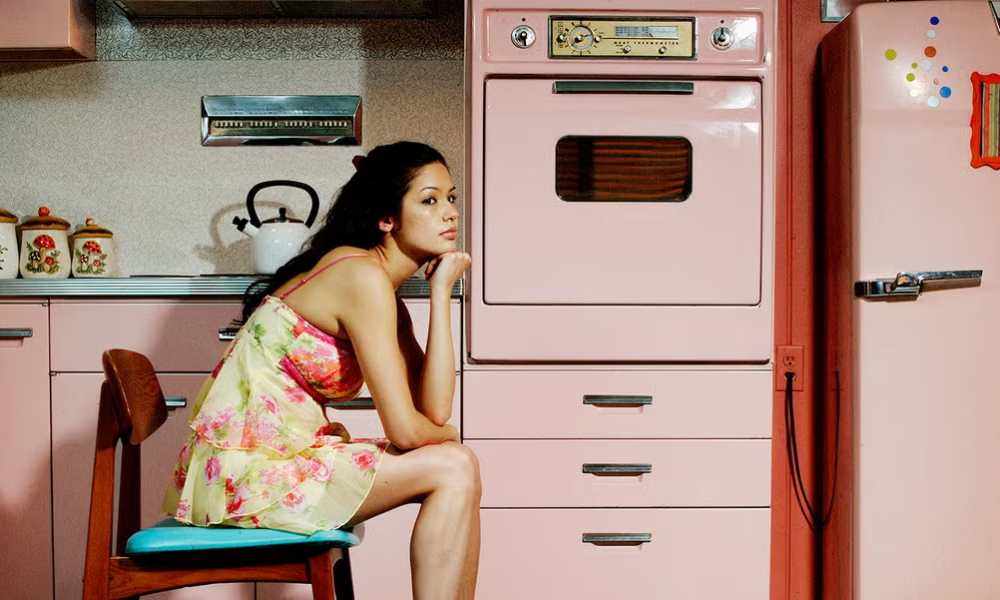
The lifestyle looks luxurious on social media. But when one partner pays for everything and the relationship has no formal commitment, who carries the risk?
The apartment is beautiful. The flowers arrive every Friday. There are slow mornings, Pilates classes, skincare routines, brunch dates, weekend getaways, and a partner who appears happy to cover the bills.
On social media, the stay-at-home girlfriend lifestyle can look like the ultimate relationship upgrade: a woman enjoys the benefits of domestic life without the pressures of a traditional job, while her boyfriend provides the money that makes it possible.
For some women, it represents freedom from exhausting work, an opportunity to focus on personal growth, or a relationship in which they feel deeply cared for. For some couples, it is a deliberate arrangement that works well for both people.

But behind the aesthetic is a question that gets surprisingly little attention: What happens when the lifestyle ends before the relationship does?
Because the stay-at-home girlfriend conversation is not just about romance, femininity, or whether a woman should work. It is also about income, bargaining power, unpaid labor, financial dependence, and what happens when two people share a lifestyle without sharing a formal commitment.
THE LIFESTYLE IS EXPENSIVE. THE FINANCIAL DEPENDENCE CAN BE EVEN MORE EXPENSIVE.
One of the biggest attractions of becoming a stay-at-home girlfriend is the possibility of living without the daily pressure of earning a salary. If a partner willingly covers rent, groceries, transport, travel, beauty expenses, and other costs, the arrangement can feel like a private version of financial freedom.
But there is an important distinction between having your expenses covered and having financial security.
Financial security means having resources you can access independently, savings for emergencies, a plan for unexpected changes, and the ability to make decisions without fearing that your housing or basic needs could disappear overnight.
A woman may live in a beautiful apartment, carry an expensive handbag, and travel internationally while having very little money in her own name. Her lifestyle may look wealthy even when her personal financial position is fragile.
There is a difference between enjoying a wealthy lifestyle and owning the financial security that makes that lifestyle sustainable.
If the relationship ends, the partner providing the money may retain the property, investments, and savings. The person who depended on that income may be left trying to replace not only the relationship but also the financial infrastructure that supported her daily life.
This is not an argument that every financially supported woman is vulnerable or that every providing man is untrustworthy. It is an argument that financial arrangements deserve the same level of honesty as emotional expectations.
THE BOYFRIEND MAY BE FUNDING A LIFESTYLE. WHAT IS THE GIRLFRIEND INVESTING?
This is where the debate becomes uncomfortable.
Some critics ask what a stay-at-home girlfriend contributes if she does not earn an income. Some supporters argue that a woman’s companionship, emotional support, domestic work, and personal presence are valuable in their own right.
Both conversations can become distorted when relationships are reduced to a financial transaction.
A healthy partnership does not require both people to earn the same amount of money. One partner may earn more while the other manages the home, provides practical support, or takes responsibility for work that allows the household to function. Couples can also choose arrangements that prioritize one partner’s career, health, education, or personal goals.
However, the details matter. Does the girlfriend actually manage household responsibilities, or does she simply enjoy a lifestyle funded by her partner? Is the boyfriend happy with the arrangement, or is he quietly building resentment? Have both people agreed on what they expect from one another?
There is no universal answer because couples define contribution differently. The problem begins when one person assumes that paying the bills entitles them to control, while the other assumes that receiving financial support creates no responsibilities or need for discussion.
Money does not automatically make one partner more important. But unspoken expectations can make both partners feel exploited.
THE UNPAID WORK QUESTION: IS SHE RESTING, OR IS SHE WORKING WITHOUT A SALARY?
The stay-at-home girlfriend label covers very different arrangements.
Some women genuinely have more leisure because their partners willingly pay for their expenses and domestic responsibilities are shared or outsourced. Others handle the cooking, cleaning, shopping, household administration, emotional support, and social planning that keep a home running.
That second arrangement can resemble unpaid domestic labor, even if the couple never describes it that way.
Domestic work has economic value. When someone prepares meals, manages household tasks, organizes appointments, and creates the conditions for another person to concentrate on a demanding career, that contribution can save money and time. It may also allow the income-earning partner to pursue opportunities that would be harder to manage alone.
But a girlfriend is not automatically responsible for performing every domestic task simply because her partner pays the bills. Nor should a boyfriend be treated as a bad partner simply because he expects an honest conversation about how their shared life will function.
The real issue is whether the arrangement is voluntary, clear, and fair to both people.
If one partner provides nearly all the money while the other provides most of the domestic labor, the couple should acknowledge both contributions. If one partner provides money and the other is genuinely free from substantial household duties, they should be honest about that too.
Fairness does not require identical contributions. It requires that neither person secretly believes the other owes them a different relationship from the one they actually agreed to have.
THE BIGGEST ECONOMIC RISK: SHE MAY HAVE NO GUARANTEED CLAIM ON THE FUTURE
Here is the part of the conversation that deserves more attention: a girlfriend and a spouse may share a household, but the legal and financial consequences of their relationships can differ substantially.
The exact rules depend on the country, jurisdiction, property ownership, and the couple’s circumstances. But in many places, simply being in a romantic relationship does not automatically give someone the same rights to property, financial support, or accumulated assets that a married spouse might have.
That distinction matters when one person has spent years outside the workforce, relocated for a partner, helped maintain a home, or turned down career opportunities because the relationship made another arrangement seem unnecessary.
Imagine a woman who spends five years as a stay-at-home girlfriend. During that period, her boyfriend’s income rises, his career advances, and he acquires assets in his own name. She contributes to their daily life and may even make choices that help his career flourish.
If they separate, she may discover that the life they built together does not necessarily translate into assets she owns or income she can rely on. Her contribution may have been meaningful without giving her an automatic legal claim to the wealth accumulated during the relationship.
That is not a prediction about every breakup. Some partners are generous, some couples own assets jointly, and some agreements provide meaningful protection. The point is that affection alone does not establish financial rights.
Before giving up years of earning potential, couples should understand what their arrangement means in practical terms. Who owns the home? Who pays for retirement savings? What happens if the relationship ends? Is there money available for the dependent partner to transition into independent living?
These questions are not romantic, but the consequences of ignoring them can be deeply personal.
THE CAREER GAP NOBODY CAN FILTER AWAY
A salary is not just money arriving at the end of the month. Employment can also build professional experience, references, industry connections, retirement contributions, and skills that become more valuable over time.
Leaving paid work may be a reasonable choice. But the opportunity cost can grow with every year away, particularly in industries where technology changes quickly or promotions depend on continuous experience.
A woman who decides to return to work after several years may face more than the challenge of finding a new position. She may need to explain a career gap, update her skills, rebuild professional relationships, and accept a lower starting salary than she might otherwise have earned.
This does not mean that every woman must maintain a full-time job to protect herself. It means that a couple should recognize the long-term cost of the decision instead of treating it as if nothing is being exchanged.
Some couples address this by maintaining an emergency fund in the dependent partner’s own name, funding retirement savings where legally and practically possible, supporting education or professional development, or agreeing on a realistic route back into paid employment if circumstances change.
Others decide that part-time work, freelancing, a small business, or continued professional training offers the right balance between flexibility and independence.
The goal is not to turn every relationship into a corporate risk assessment. It is to ensure that a temporary romantic arrangement does not quietly close doors that one partner may later need to reopen.
WHY THE SOCIAL MEDIA VERSION CAN BE MISLEADING
Social media rewards the visible parts of a lifestyle: the gifts, the holidays, the designer purchases, the immaculate apartment, and the captions about being provided for.
It rarely shows the complete financial picture.
You may not know whether the woman in the video has personal savings, owns property, has an independent income, receives a regular allowance, or has agreed to a clear financial plan with her partner. You may not know whether the man is comfortably wealthy, temporarily spending beyond his means, or simply choosing to share selected moments of their relationship online.
And you may not know whether the arrangement is genuinely peaceful or whether the couple has unresolved disagreements that never make it into the final edit.
This is why copying a relationship lifestyle from social media can be risky. Two couples can appear to live identical lives while having completely different levels of financial security.
One woman may be supported by a partner who encourages her to save, invest, learn, and make independent decisions. Another may depend on a partner who can withdraw financial support at any time. The pictures may look the same. The underlying economics are not.
The most important question is not whether a woman receives flowers or whether her boyfriend pays for dinner. It is whether the arrangement supports a stable life that both partners freely choose.
IS BEING A STAY-AT-HOME GIRLFRIEND A BAD IDEA?
Not necessarily.
Adults can choose how to structure their relationships. Some people value traditional roles. Others prefer dual-income households. Some couples have temporary arrangements while one partner studies, recovers from a difficult period, builds a business, or prepares for a major life transition.
A stay-at-home girlfriend arrangement can work when the financial provider genuinely wants to provide, the dependent partner freely accepts the arrangement, both people communicate openly, and neither uses money as a tool of coercion.
It becomes more concerning when financial support is used to restrict friendships, control clothing, dictate movement, demand obedience, or make a partner feel unable to leave. Dependence can make it harder to challenge unfair treatment when housing and basic expenses are tied to the relationship.
That is why personal financial resources matter even in a loving relationship. Having savings or earning capacity does not mean someone expects the relationship to fail. It means they retain choices if circumstances change.
A healthy provider does not need their partner to be financially helpless to feel valued. And a healthy dependent partner does not need to pretend that financial vulnerability is the same thing as being loved.
FIVE QUESTIONS EVERY COUPLE SHOULD ANSWER BEFORE MAKING THE ARRANGEMENT
Before one partner leaves paid employment or becomes financially dependent, the couple should have a direct conversation about the practical details.
1. What exactly does financial support cover?
Rent, food, transport, healthcare, personal expenses, travel, savings, and emergencies should not be left to assumptions. Both partners should understand what is included and what happens when expenses change.
2. Will the dependent partner have money of their own?
Discuss personal spending money, emergency savings, access to financial accounts, and a realistic plan for unexpected costs. Financial support should not require someone to request permission for every basic need.
3. What happens if the relationship ends?
Talk about housing, notice periods, relocation, shared purchases, and how the dependent partner could support themselves during a transition. Where relevant, obtain qualified legal advice about property rights and any agreement the couple is considering.
4. How will the couple recognize unpaid contributions?
If one partner takes responsibility for household management or other ongoing work, discuss how those responsibilities will be divided and whether they are sustainable. Do not allow assumptions to become invisible obligations.
5. Is the arrangement a shared decision or a condition of being loved?
Neither partner should feel pressured to surrender independence to prove commitment. A financial arrangement should reflect the couple’s genuine preferences, not fear, manipulation, or the belief that love must be demonstrated through dependence.
THE REAL DEBATE IS NOT ABOUT WHETHER WOMEN SHOULD WORK
The internet often turns the stay-at-home girlfriend conversation into a contest between two opposing identities: the woman who wants to be provided for and the woman who wants to earn her own money.
That debate misses the point.
A woman can enjoy being provided for and still value financial independence. A woman can have a successful career and still want a partner who takes responsibility for their household. A man can genuinely enjoy providing without believing that financial contribution gives him ownership over another adult.
The real conflict begins when couples confuse a preferred lifestyle with a complete financial plan.
Being provided for can be a meaningful expression of love. But love does not automatically replace savings, career options, clear agreements, or legal protections. Likewise, earning a salary does not guarantee financial security, emotional fulfillment, or a healthy relationship.
The strongest arrangements recognize both emotional and economic realities. They allow couples to enjoy the benefits of their choices without pretending that those choices have no consequences.
WHAT HAPPENS WHEN THE ROMANCE MEETS REALITY?
The stay-at-home girlfriend trend raises an important question about modern relationships: how do two people share a life when they do not necessarily share the same income, legal status, or financial security?
There is no single arrangement that works for everyone. The answer depends on the couple’s values, resources, responsibilities, and willingness to plan honestly.
But one principle should be non-negotiable: neither person should have to sacrifice their ability to make meaningful choices simply to maintain the relationship.
If a woman chooses to stay home, the decision should come with an honest understanding of the financial trade-offs. If a man chooses to provide, his contribution should be appreciated without turning it into a claim of ownership. If both people want a traditional arrangement, they should build one that protects their shared future as well as their present lifestyle.
The flowers may be beautiful. The holidays may be unforgettable. The freedom from a demanding job may be real.
But the most important luxury in any relationship is not having someone else pay every bill. It is knowing that the life you are building together is fair, sustainable, and freely chosen by both people.
A relationship can provide comfort without guaranteeing security. The smartest couples understand the difference before life forces them to.
BUILD A RELATIONSHIP THAT WORKS BEYOND THE AESTHETIC
At HtohTalks, we believe lasting relationships require more than attraction and good intentions. Couples need honest conversations about money, expectations, responsibility, commitment, and the future they want to build together.
Explore these resources to start those conversations:
- Marriage Is Business — explore the practical decisions and shared responsibilities that help relationships function beyond romance.
- Take the SoulSync Spark Test — reflect on relationship compatibility and the conversations that deserve attention.
- Explore the HtohTalks Masterclass Series — develop a more intentional approach to relationships, expectations, and lasting partnership.
LET’S TALK ABOUT IT
Would you choose to be a stay-at-home girlfriend if your partner could comfortably cover every expense? Or would you still want your own income, savings, and career?
And if you were the provider, what would make the arrangement feel fair to you? Share your perspective. The goal is not to shame anyone’s choices, but to have the financial conversation that the lifestyle aesthetic often leaves out.
Discover more from Htohtalks
Subscribe to get the latest posts sent to your email.